












“Why is it that some home furnishings retailers succeed with their change initiatives while others stumble?”
During a recent group session, a member of one of my performance groups shared how she implemented an innovative process that helped her stores save time and improve customer experiences. That prompted another retailer to explain that he attempted a similar rollout, which failed to gain traction. This sparked a discussion about why some home furnishings retailers succeed with change initiatives, while others, whose ideas and intentions are practically identical, stumble.
Over the past 25 years, I've worked closely with retailers across North America and globally, helping implement business improvements, technology solutions, and process innovations. There have been countless success stories, as well as some stalls. Here are ten observations that explain the difference in success rates between those furniture retailers that drive innovation and those that abandon it.
#1 Leadership
Innovation depends on more than ideas; it requires leaders who commit, set the pace, and get involved in execution. In the highest-performing operations, owners and executives are not just strategists—they are change agents. Most successes come from change mandated by leaders at the very top. Fewer wins come from the middle ranks where change is delegated or optional.
Committed leaders attend project meetings, review progress, and hold teams accountable. When leaders show up and push initiatives forward, resistance fades and alignment strengthens. Without visible leadership, change dies in the middle.
#2 Culture
Companies that embrace innovation build cultures where change is expected, not feared. They reward improvement and support experimentation. These businesses are willing to replace outdated policies, implement performance-based pay, or shift merchandising strategies when data supports it. A culture that encourages open communication, learning, and course correction becomes fertile ground for progress.
Conversely, some operations allow people to oppose change and offer excuses about “special circumstances.”
#3 Followers that are “Doers”
Even with strong leadership, innovation will not happen without execution. Successful businesses do not just delegate change—they build teams of doers who take ownership.
If two stores are given the same plan to sell more adjustable bases and one moves forward while the other complains, it is clear which one will get better results. Frontline players turn strategy into action. Whether they implement improvements or complain about technology or process often determines success or failure. Good teams of doers make everyone’s lives easier, not harder.
#4 Measurement
What gets measured gets improved. High-performing companies tie every change to metrics.
Result metrics:
- GMROI, close rate, revenue per guest
- Service satisfaction, sales growth, inventory turns
- For a selling process: salesperson performance and average ticket
- For delivery: damage rate, on-time delivery, customer follow-up
Forward indicators (influence results):
- New prospect appointments scheduled
- Next-purchase follow-ups planned
- Delivery and pick-up outreach
Data validates change and motivates improvement.
#5 Perseverance: Easy vs. Hard
Innovation usually gets harder before it gets better. Teams implementing new systems may struggle at first. The ones that persist reach better results and settle into new comfort zones. Those who quit wonder why changes never work out. Learning, development, and peak performance come from persevering through friction.
#6 Investment and Cost
Real change requires real time and money. Whether upgrading technology, training, or compensation plans, investment is needed. The best retailers budget for innovation, allocate time and capital, and act. They do not just talk about performance groups or benchmarking; they participate, measure, and improve. The payoff is better performance, stronger customer experience, and long-term growth.
#7 Belief
Change does not progress without belief—belief that a new way is better, the investment will pay off, and people can rise to the challenge. For example, team-based sales structures require belief in coaching, cross-training, and collaboration. Belief creates consistency, and consistency drives results.
#8 Professionalism & Desire
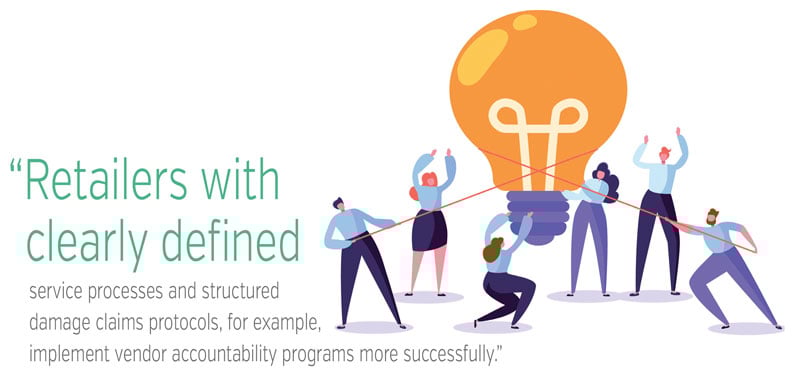
A professional environment fuels execution: structured meetings, accountability check-ins, clean data, and proactive communication. Retailers with clearly defined service processes and damage-claims protocols implement vendor accountability more successfully. Professionalism turns good ideas into working systems.
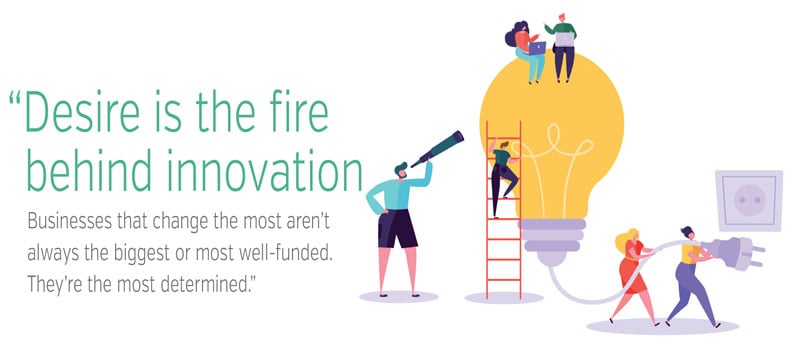
Desire is the fire behind innovation. The businesses that change the most are not always the biggest or best-funded—they are the most determined. They benchmark financials monthly, analyze profitability by category, and rethink warehouse prep flows for better delivery efficiency. They are not satisfied with “okay” and always aim higher.
#9 Continual Commitment
A key indicator of success is whether a company treats innovation as a one-time event or a continuous practice. The best teams revisit strategies, review KPIs, and update processes. Whether fine-tuning sales contests, refining open-to-buy, or improving compensation plans, they never stop working on the business.
#10 Organization & Communication
Strategy becomes reality through daily tasks and clear communication. Ask several teammates which tools they use and most will list email, text, and phone—communication tools—rather than organizational tools like a CRM activity scheduler or a shared calendar scheduler. These two tools should be standard in every business: the CRM tracks tasks and missed activities; the calendar tracks when important activities must be completed. Together they help employees follow up and help managers supervise workload.
“The two organizational tools every retailer should use are a CRM activity scheduler and a calendar scheduler.”
Tip: a daily zero-inbox triage
- Do it (right away).
- Delegate it.
- Schedule it (as a CRM activity).
- Delete it.
Conclusion
Innovation is not luck. It is leadership-driven, culture-supported, executed by doers, and measured relentlessly. It takes grit, belief, and investment. Companies that commit to innovation consistently outperform the rest. If you are serious about lasting change, review these 10 areas and ask: are we ready to do the necessary, sometimes hard, work? Innovation works—but only if you work it.
Suggested reads

See initially published articles by David at Furniture World