













Tech Transformation 2026
Scroll down to read the article.
⌄
⌄
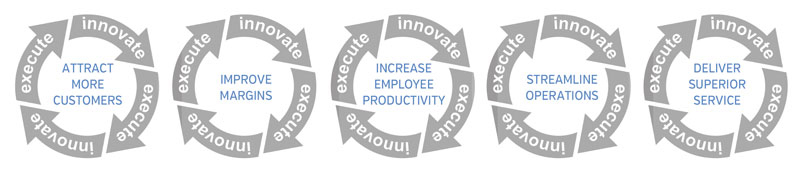
An in-depth look at what retailers are doing right now to attract more customers, improve margins, streamline their operations, increase employee productivity, and deliver superior service.
Technology is transforming the home furnishings industry. Every year, the distance widens between retailers who embrace technological innovation and those who continue to operate with legacy processes that no longer meet consumer expectations. Many innovative organizations increasingly see themselves as experience- and technology-centered businesses that sell furniture, rather than furniture stores that occasionally use technology. That shift in identity is not superficial. It influences decision-making, organizational structure, investment priorities, hiring, and ultimately the level of value delivered to customers.
In my work with retailers across North America and abroad, I see a consistent pattern among innovative organizations that are building their businesses around three core pillars: integration, automation, and AI. They follow through and execute relentlessly to ensure success. Technology does not work by itself. People make technology work. Leadership drives execution, and execution is where most competitors fall short. Even the best systems, data, and tools collapse into clutter when they are not fully implemented and continuously improved. Successful retailers treat execution as a discipline and a strategic advantage.
This article provides an in-depth look at what leading retailers are doing right now to attract more customers, improve margins, streamline operations, increase employee productivity, and deliver superior service. The framework is organized around four critical funnels that represent the customer journey: marketing, selling, operations, and after-sales service. These funnels clarify where technology can produce the greatest impact and how retailers can build sustainable competitive advantages.
Innovation Isn't Optional
“Technology is not removing the human side of our industry—it is amplifying it.”
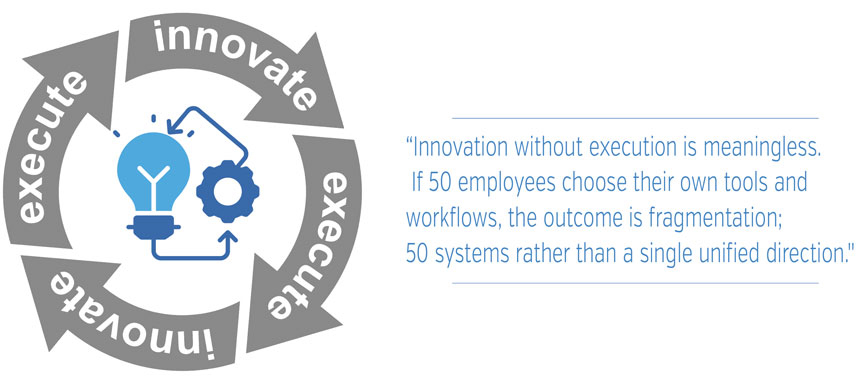
Innovation without execution is meaningless. If 50 employees choose their own tools and techniques, the outcome is fragmentation for the organization; 50 systems rather than a single unified direction. Leadership must define the technology vision, select the right tools, establish standards, and insist on full adoption. A common mistake I see is retailers jumping from one platform to another because the previous ones were never fully implemented. Success comes from tools that are completely executed, not from chasing something new prematurely.
1. Marketing Funnel Evolution: Campaign Sent → Viewed → Connection → Lead Captured.
The marketing landscape continues to evolve quickly. AI, automation, and CRM connectivity have transformed how retailers design campaigns, generate content, distribute messaging, and measure performance. What previously required teams of specialists can now be done by lean marketing departments at high speed.
AI-Enhanced Creative
Retailers are using AI to brainstorm campaign ideas, analyze competitors, refine messaging, develop layouts, and produce video scripts. Many now generate video content faster than they ever thought possible. Since today’s consumers rely heavily on visuals when researching home furnishings, the ability to produce video quickly and consistently has become a critical part of the marketing engine.
Modern Email & Text
Texting has become central for immediacy-driven communication. Email remains powerful for detailed storytelling, style guides, vendor features, multi-link messages, and product inspiration. AI improves these messages by summarizing long internal chains, cleaning up copy, and personalizing content for segmented audiences.
Triggered automations activate when customers browse key categories, click vendor links, open pricing pages, revisit past searches, or interact with campaigns. These triggers ensure relevance, increasing engagement rates without requiring additional labor.
Segmentation & Relevancy
Modern CRMs can segment audiences easily by category interest, vendor affinity, neighborhood, budget level, past purchase history, and browsing behavior, for example. This allows retailers to deliver personalized near-automated content at scale. Customers no longer need to be blasted with general promotions. Instead, communications are becoming more relevant and targeted.
Lead Capture leads to The Funnel
Every marketing action should push prospects into a structured funnel with ownership and next steps. Digitization helps ensure more leads are captured and less are lost, misplaced, or ignored. Organized handling of leads with technology is one of the biggest innovations that produce results.
2. The Selling Funnel: Lead Arrives → Qualifying → Solutions → Sale → Follow-Up.
The selling funnel is the backbone of retail performance. It is also the area where technology enhances human interaction the most. One of my most forward-thinking clients describes the philosophy well: “We use technology to become more human.” In other words, the purpose of technology is not to replace personal interaction, but to make every interaction sharper, faster, more informed, and more relevant.
Digital Funnels
Retailers that rely solely on walk-in traffic leave business on the table. Digital selling funnels combined with appointment-setting tools consistently generate the highest close rates and strongest average tickets. Appointments allow preparation, planning, and better service. They are predictable and measurable.
Mobility on the Sales Floor
Sales teams using modern tech now operate largely from mobile devices. Quotes, notes, inventory verification, customer histories, room photos, follow-ups, and measurement details are all captured instantly. CRMs, POS systems, calendars, and websites can integrate tightly, allowing sales professionals to work fluidly without needing stationary terminals.
AI Visualization & Room Planning
With AI, customers and sales associates can use their phones to visualize products in spaces, compare scale, change fabrics, and explore design options. Since home furnishings purchasing is heavily dependent on fit and style confidence, visualization tools shorten the decision cycle and reduce cancellations.
Tagging & Automation
Customers stay in the funnel until they buy or opt out. Retailers can digitally classify customers by urgency, category, project type, timeline, or desired style. This level of organization allows automations to deliver consistent follow-up, ensuring no opportunity is forgotten and no prospect feels neglected.
3. The Operations Funnel: Sale Written → Order Updates → Scheduling → Routing → Delivery → Post-Delivery.
Operations is where retailers win or lose customer trust. Technology has created some of the biggest improvements in this area.
Confirmation & Loyalty Integration
Customers receive digital confirmation immediately after purchasing. Many stores automatically enroll buyers into loyalty programs that reward future purchases, boosting retention and lifetime value.
Order Status & Task Automation
When order statuses change or customers request updates, systems can automatically notify the correct team member. If additional actions are needed, automated tasks ensure accountability and visibility. This eliminates lost notes, forgotten follow-ups, and customer frustration.
Scheduling & Routing Efficiency
Once merchandise arrives, customers receive automated scheduling options via text or email. AI assisted routing determines the most efficient delivery path, improving capacity and minimizing errors. The reduction in manual scheduling saves time and increases customer satisfaction.
Post-Delivery Communication
Automated systems can send delivery photos, thank-you notes, surveys, and review requests. These steps often eventually lead to repeat purchases and referrals.
4. The After-Sales and Service Funnel: Issue Intake → Diagnosis → Vendor Communication → Resolution → Follow-Up.
Service has undergone major transformation through technology.
Integrated Ticketing Systems
Customers can submit service issues through website forms, QR codes, email, and text. Tickets route instantly to the right team, and every update is tracked. Service phone hotlines integrate directly to CRMs. This speeds up the process and records all notes on the customers’ profile automatically. Transparency replaces guesswork.
Vendor Communication
Tickets connect directly with vendor communication channels. Parts, approvals, and updates flow quickly, dramatically improving resolution times.
Proactive Outreach
Automated reminders prompt teams to check in with customers months after delivery. This reinforces relationships and uncovers new selling opportunities.
Training & Knowledge Hubs
Retailers now centralize SOPs, training videos, product knowledge, and policy documents. AI search lets employees ask questions and receive precise answers instantly, reducing onboarding time and improving performance.
Accelerating Trends
• Business speed will increase across all functions.
• Integrations will feel seamless and universal.
• Legacy systems will disappear as innovation becomes a baseline requirement.
• Organizations and individuals who resist technology will naturally be outpaced.
A line I use captures this competitive landscape: “A gladiator with the sharpest sword and the best techniques will always defeat unfit adversaries with dull weapons.” Technology and innovation is the sword. Execution and training is the technique. When all are strong, success becomes more likely.
Final Thoughts
Technology is not removing the human side of our industry, it is amplifying it. The retailers who will win in the coming decade are those who embrace tools that make their teams faster, smarter, more organized, and more relevant to their customers. The formula is simple: choose strong technology, execute fully, and improve continually. That is how retailers win today and how they will win tomorrow.
About David McMahon
David McMahon is founder of PerformNOW Inc. PerformNOW has three main products that help home furnishings businesses improve and innovate: Performance Groups (Owners, Sales managers, Operations), PerformNOW CXM (Customer eXperience Management systems and processes), Furniture business consulting. Your can reach David at [email protected].

See initially published articles by David at Furniture World
Read more
Case Study: Marketing Effectiveness Metrics
Retailer “A” has a bigger ad budget. Retailer “B” uses more digital media. Which one gets better returns?
Appointment Power
Scheduling appointments in advance with shoppers at multiple points throughout the sales process has proven to substantially increase close rates.
7 Common Characteristics of Profitable Furniture Businesses
What are the characteristics that separate the best operations from the worst?