











Service CRM, Great service is a system.
PerformNOW CXM gives furniture retailers one structured system to log, assign, track, and resolve every customer service issue.
Service issues don't disappear. They compound.
One workspace for customer service
Every customer issue logged, assigned, resolved
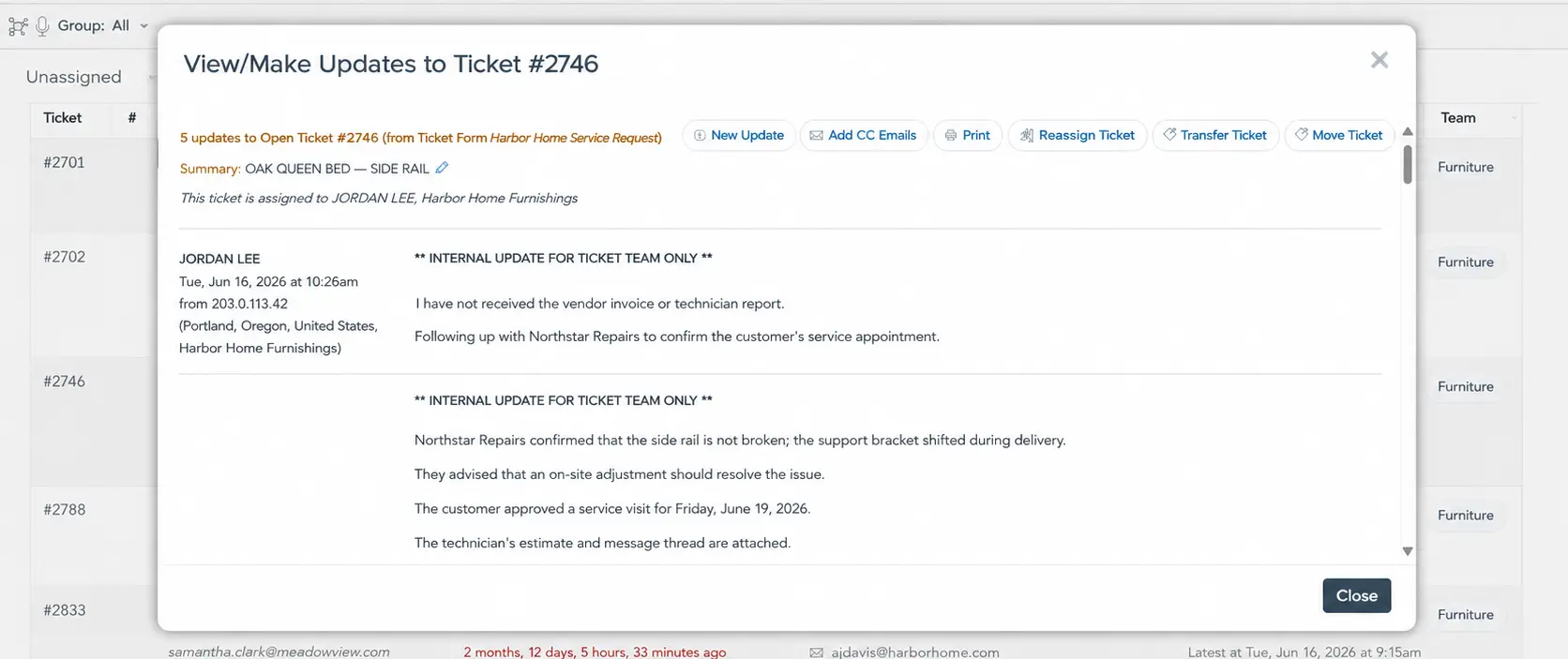
Capture product issues, delivery damage, protection-plan claims, and complaints in one ticket linked directly to the customer record.
Track internal damage from report to repair
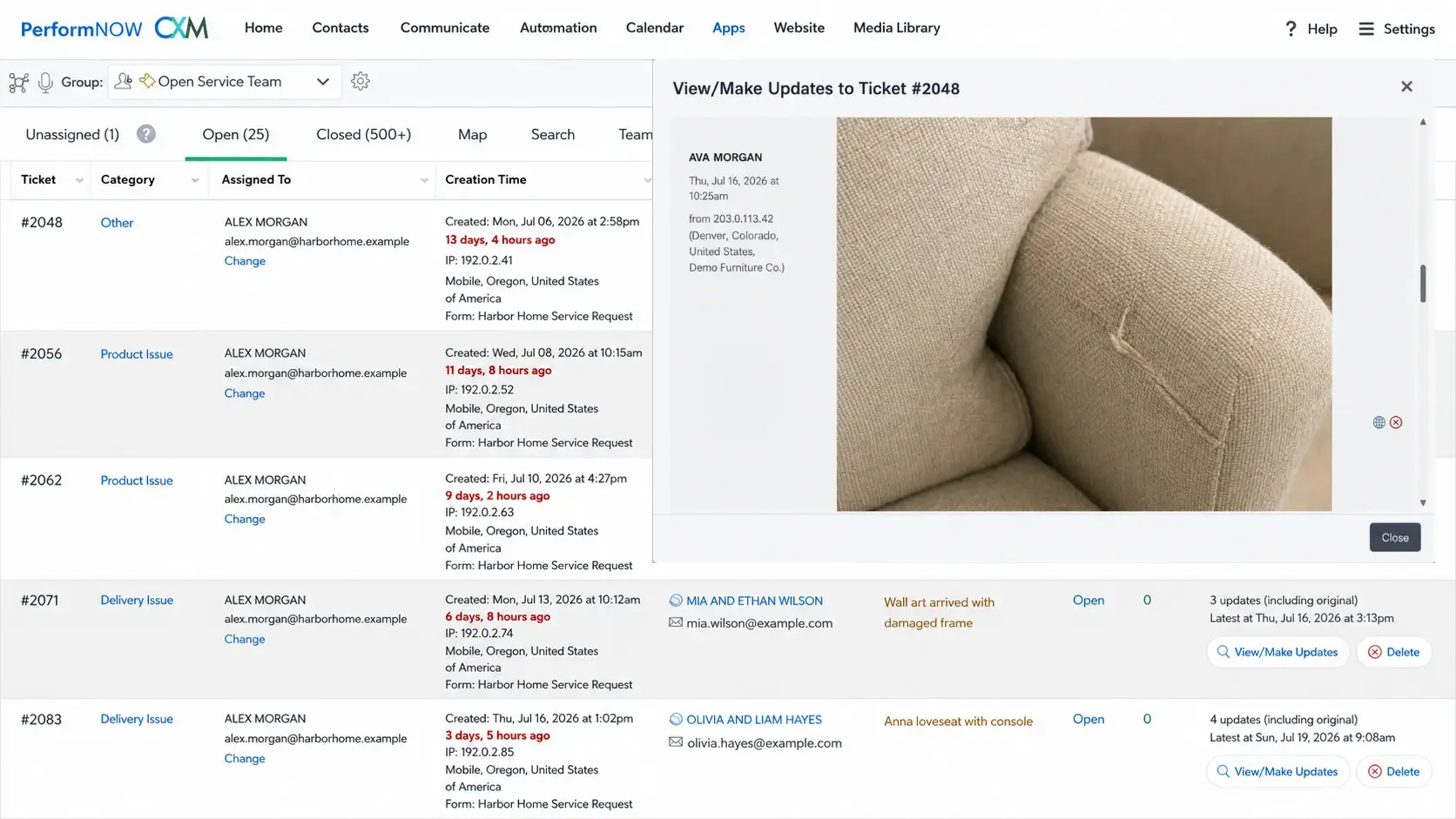
Give warehouse and repair teams a structured workflow for items damaged in transit, in-store, or during handling.
Recover vendor costs with a complete evidence trail
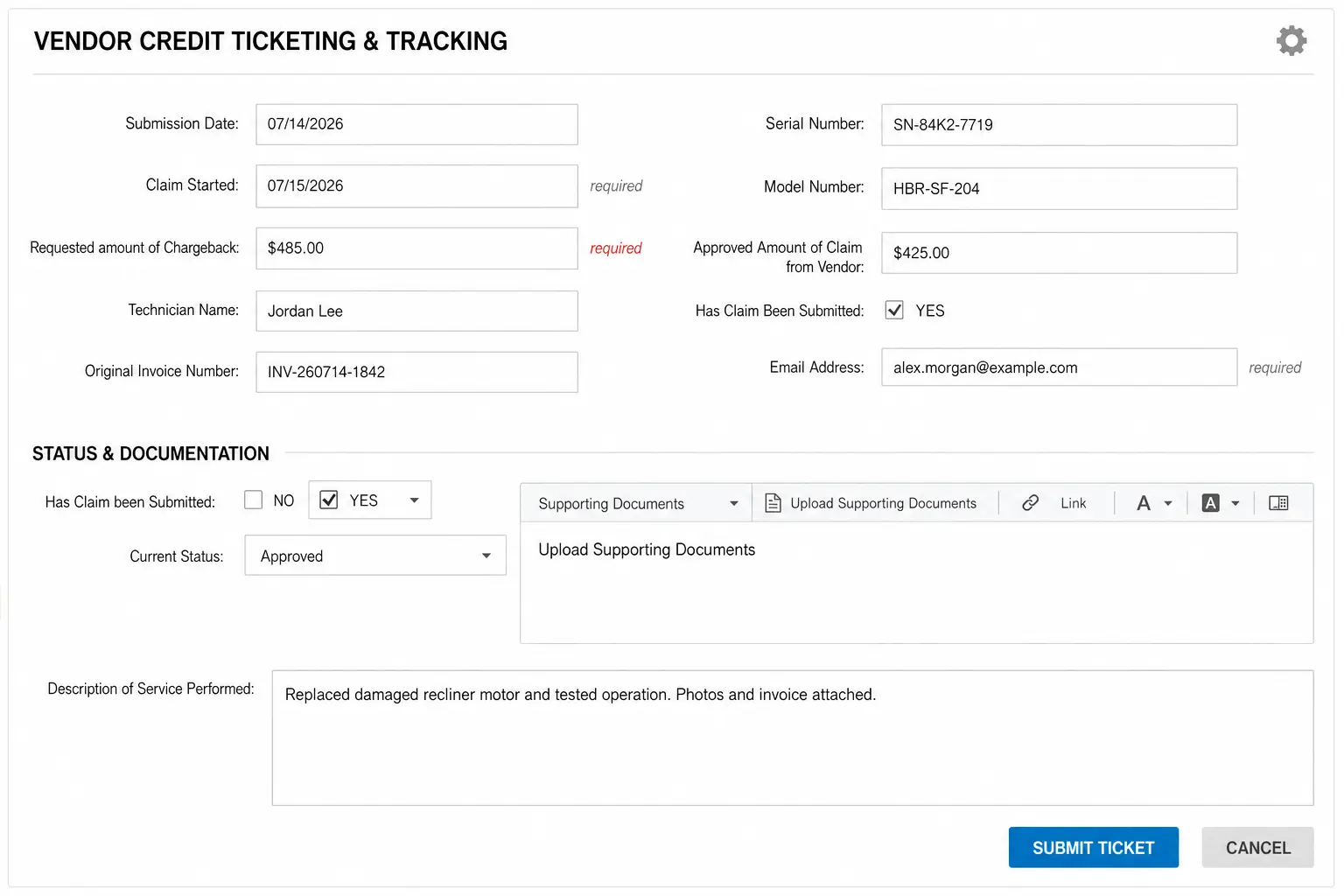
Document manufacturer defects, claim amounts, photos, product details, technician work, and approval status in one place.
Catch unhappy customers before they post
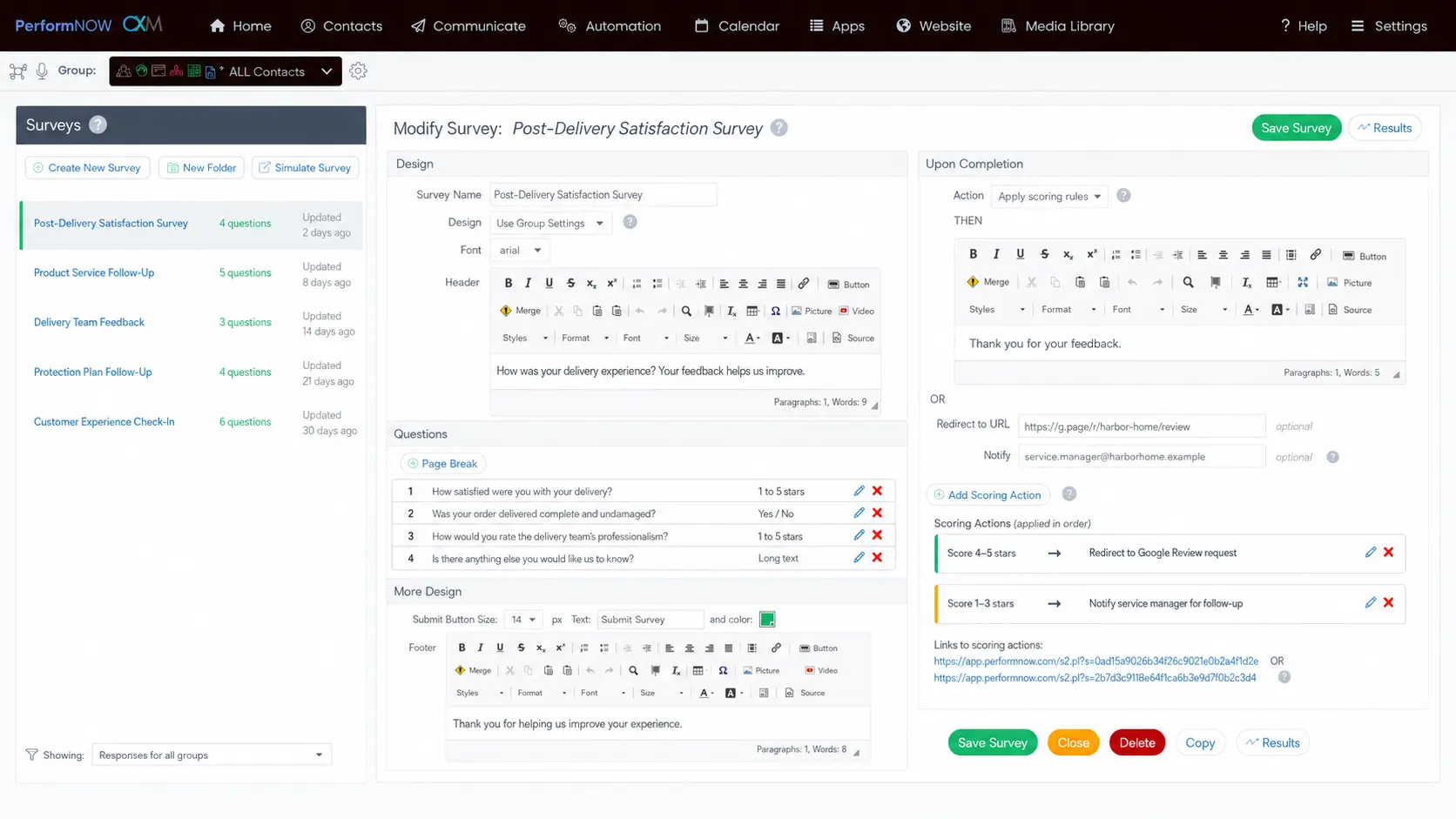
Turn delivery feedback into a consistent reputation workflow that sends happy customers to Google and alerts managers to poor experiences.
Keep customers informed from order to delivery
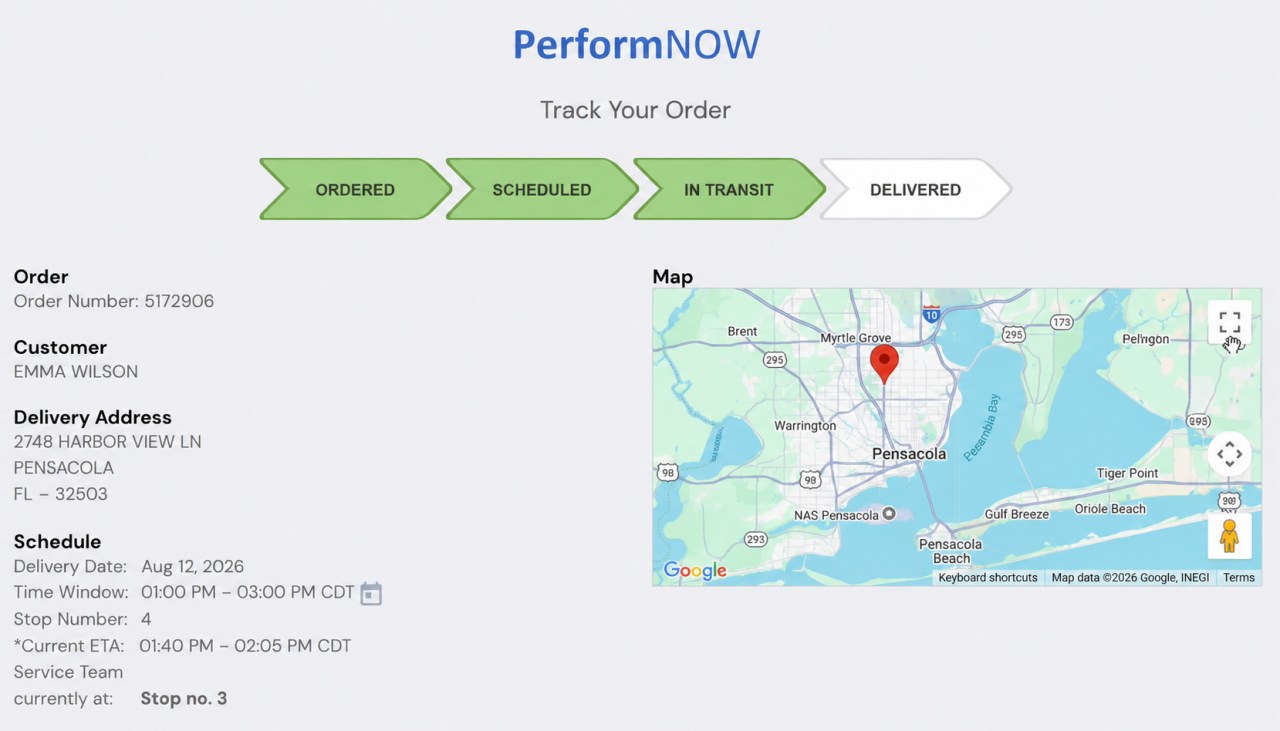
Automate the customer journey from sale confirmation and delivery scheduling to live tracking, proof of delivery, and satisfaction follow-up.
See ticket volume, trends, and team performance
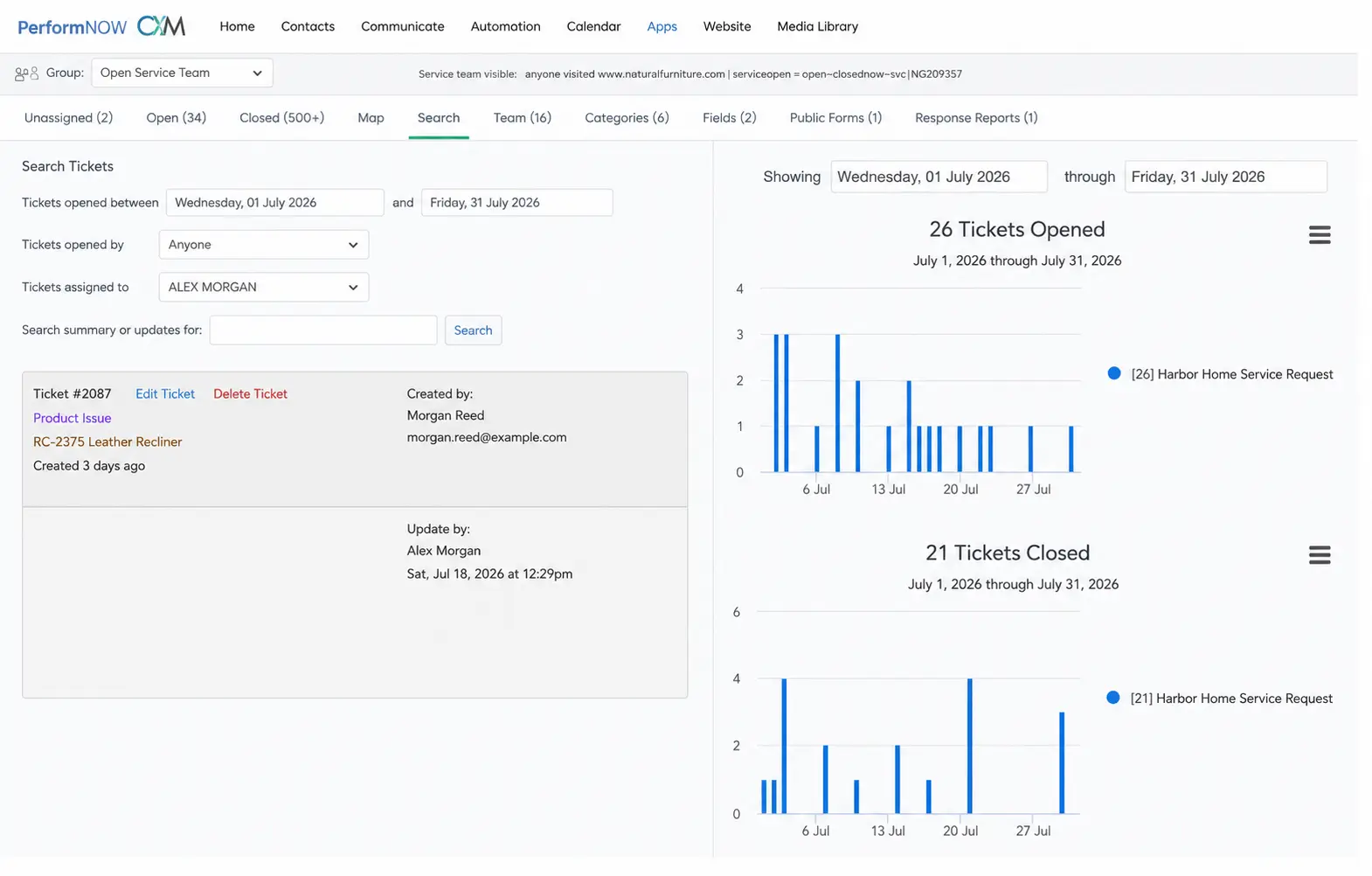
Give service managers real-time visibility into open tickets, resolution time, recurring issues, customer satisfaction, and team workload.
See how home furnishings retailers use PerformNOW CXM
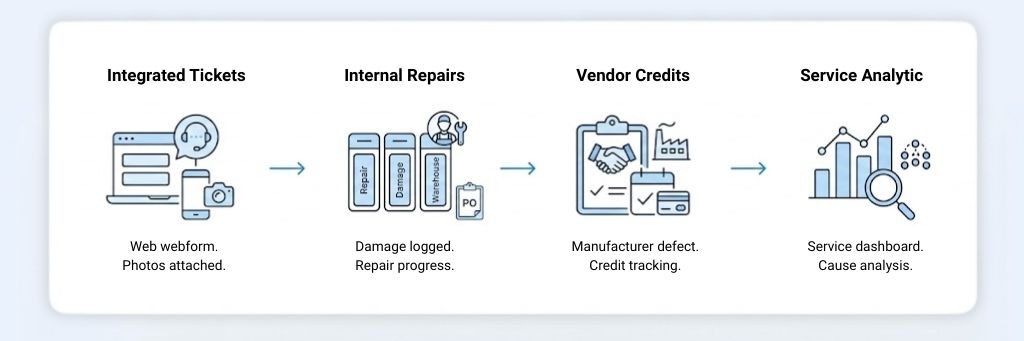
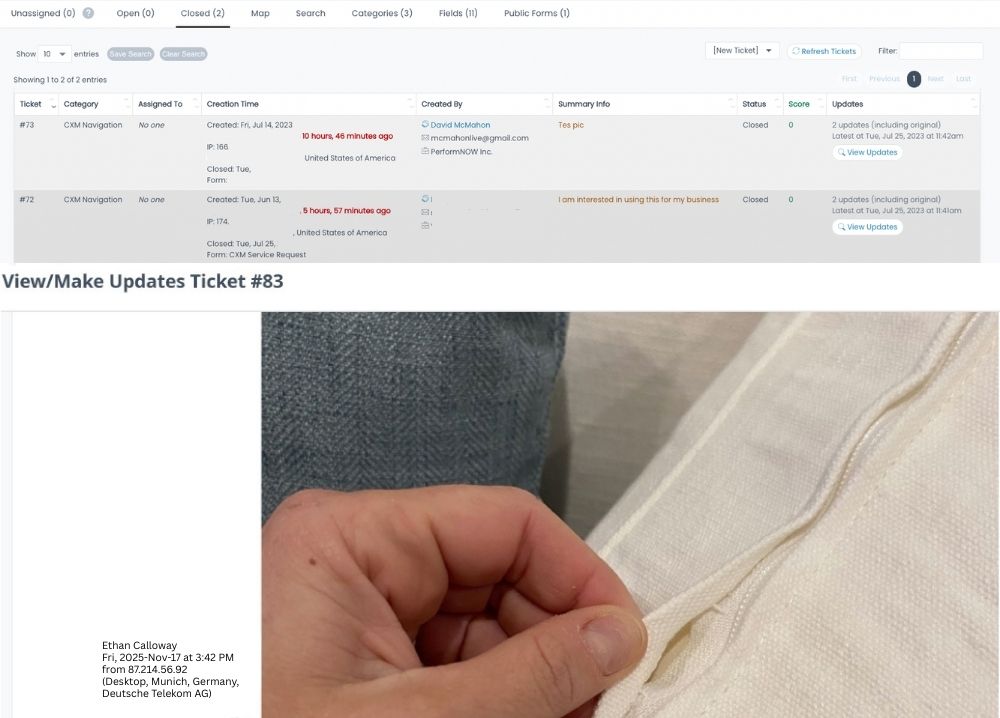
Integrated Service Ticketing (Customer)
Branded service request forms (web-based)
Required fields to reduce back-and-forth (contact, address, issue type, etc.)
● Attach photos and details to the ticket
● Track status from open → updates → resolution
● Keep a clean history of communication and actions
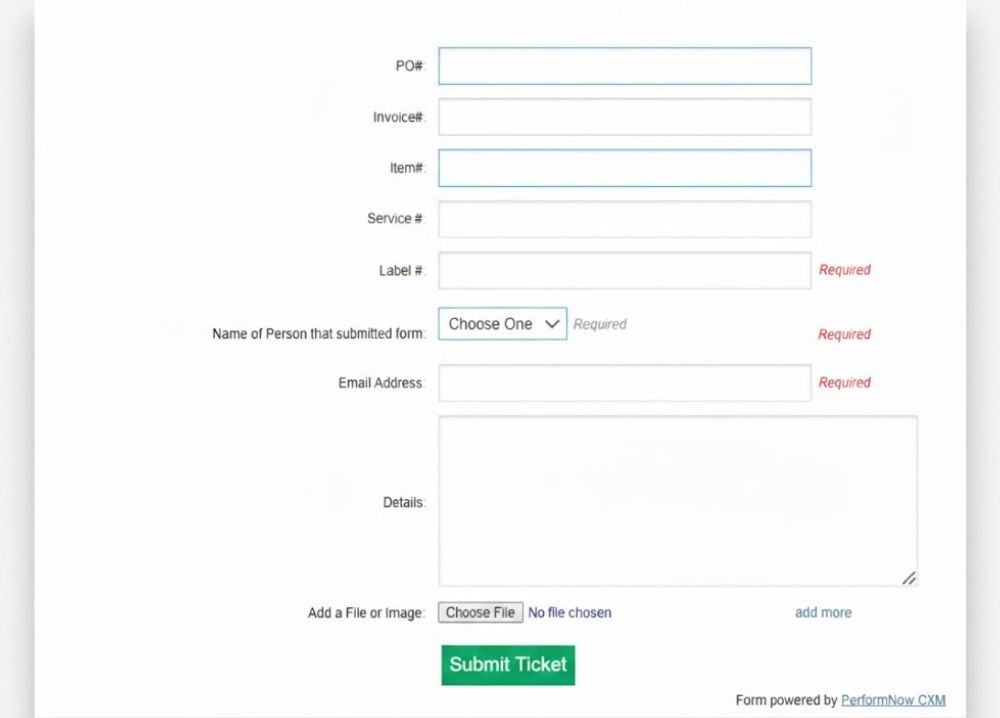
Internal Repair / Damaged Ticketing
Internal-only forms for repair/damage reporting ● Assign to the right team member or location ● Document item/invoice/PO info + attachments ● Track progress, notes, and outcomes for accountability
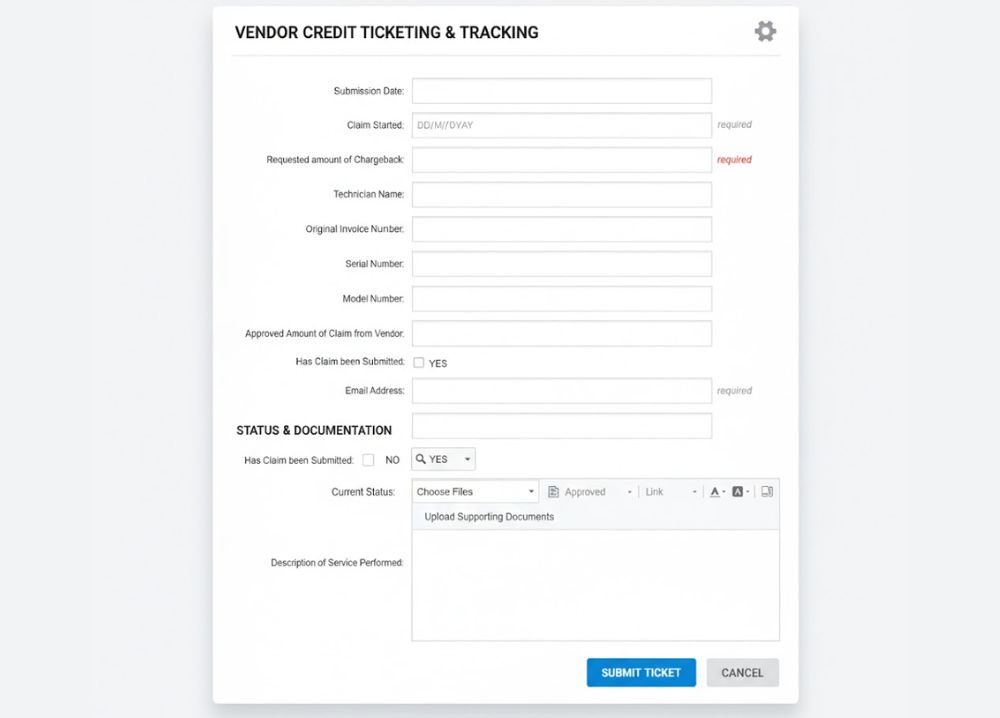
Vendor Credit Ticketing / Tracking
Internal-only forms for repair/damage reporting ● Assign to the right team member or location ● Document item/invoice/PO info + attachments ● Track progress, notes, and outcomes for accountability
Automation
Automated Routing
● Assign by category
● Location-based routing
● Team-based queues
Notifications
● Internal alerts
● Status updates
● Escalations
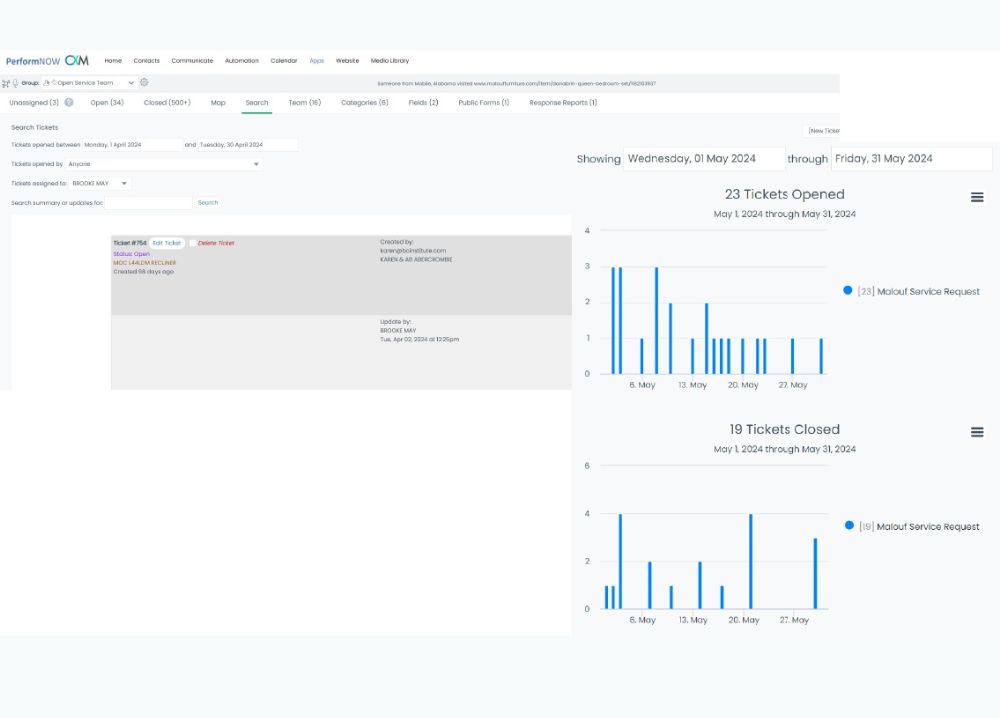
Reporting & Analysis
● Open vs closed tickets by date range
● Volume trends and categories (what’s driving issues)
● Ticket aging (how long issues stay open)
● Team performance visibility (workload + completion)